Historic My Tho Swing Bridge & 1885 Indochina Railway Relics
Bao Dinh River Confluence – Thu Khoa Huan & Nguyen Hue St, My Tho Ward
Architectural & Cultural Essay
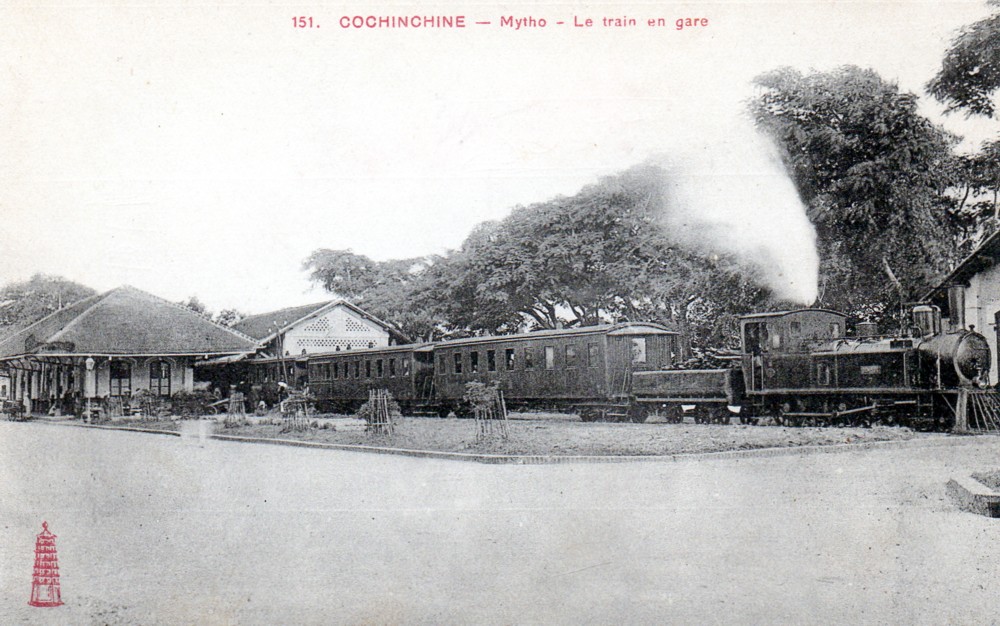
An urban industrial heritage complex at the confluence of the Bao Dinh and Tien Rivers in My Tho Ward, marking the terminal of the 70.9-kilometer Saigon–My Tho Railway inaugurated on July 20, 1885 (the first railway in Indochina) and the 1890 Eiffel-built iron swing bridge whose central span rotated 90 degrees for river junks.
On July 20, 1885, the inaugural train from Saigon pulled into My Tho Station along the Tien Riverbank, launching the very first railway line in Vietnam and all of Indochina across a 70.9-kilometer route. Historic My Tho Station sat directly beside the river pier (present-day Lac Hong Park on 30/4 Street) to enable seamless transfers between railcars and the Mekong steamships of the Messageries Fluviales. To link the central administrative quarter with the Old Market across the Bao Dinh River without obstructing tall-masted rice junks, French authorities commissioned the Eiffel company in 1890 to construct a riveted steel Swing Bridge connecting Thu Khoa Huan and Dinh Bo Linh streets. The original 1890 Swing Bridge was a late 19th-century mechanical marvel: its central truss rested on a masonry pivot pier mid-channel, operated by hand-cranked gears to rotate 90 degrees open at scheduled intervals for river vessels. Meanwhile, the nearby My Tho Railway Terminal featured French masonry walls and iron-truss platform canopies, serving passengers and delta freight continuously for 73 years until 1958. In 1993, to accommodate modern vehicular loads, the bridge was rebuilt in reinforced concrete while retaining its cherished historical name, Cau Quay. Today, walking from the former railway terminal footprint along Lac Hong Embankment toward the Swing Bridge at dusk offers sweeping views of the confluence where the 1705 Bao Dinh Canal meets the Tien River, evoking the bustling maritime-rail era of old My Tho.
Highlights
Frequently Asked Questions (3)
The 70.9-km railway line inaugurated its first run on July 20, 1885, and operated for 73 years until service ceased in 1958.