Phat Da Pagoda (Vinh Phuoc Ancient Temple)
Ly Thuong Kiet Street, My Tho Ward, My Tho City
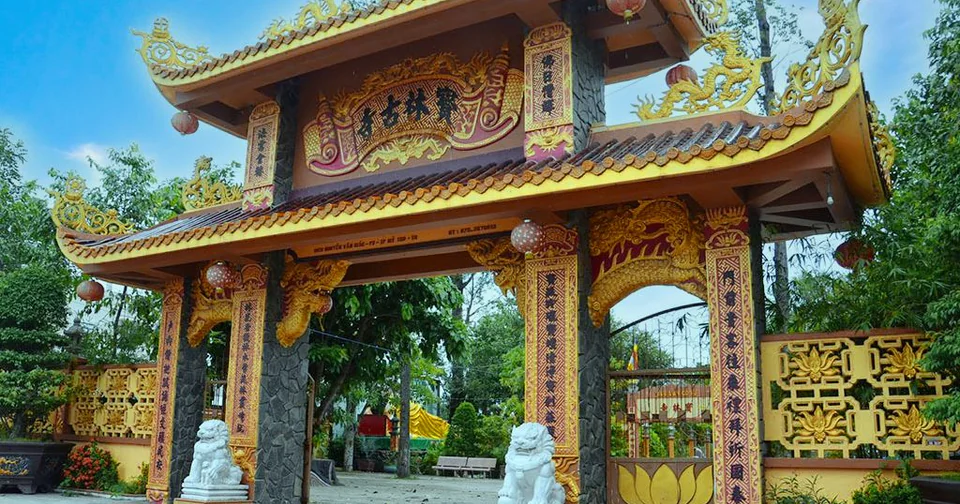
Architectural & Cultural Essay
An ancient Buddhist temple over 200 years old linked to the discovery of a monolithic sandstone statue dating back to the 6th–7th century Oc Eo – Funan civilization beneath the alluvial soil of the My Tho – Dinh Tuong region. The monastery preserves traditional Southern Vietnamese Buddhist architecture, ancient Bodhi trees, and rare archaeological heritage within a tranquil sanctuary.
Originating in the late 18th and early 19th centuries, Phat Da Pagoda (recorded in regional chronicles as Vinh Phuoc / Linh Phuoc Ancient Temple of historic Dinh Tuong) is closely tied to the land reclamation history of the Tien River basin. While digging irrigation canals through alluvial wetlands, local settlers unearthed a monolithic greenish-grey sandstone statue buried deep in the clay. Archaeologists dated the sculpture to the 6th–7th centuries CE, belonging to the Oc Eo culture of the ancient Funan Kingdom that once flourished across Go Thanh and the lower Mekong delta. Through more than two centuries and subsequent structural restorations, the temple retains the classic layout of a Southern Vietnamese monastery with a triple-arched gate, an open courtyard, and a main sanctuary topped with curved fish-scale tiles. Enshrined upon a central lotus pedestal inside the sanctum is the ancient stone statue, whose balanced proportions and serene expression have endured over a millennium. Surrounding the altar are gilded wooden parallel couplets, horizontal lacquered boards, and an antique bronze bell sounded during morning and evening chants. Passing through the temple gate, urban bustle gives way to the deep shade of a century-old Bodhi tree and subtle sandalwood incense. On lunar full-moon and new-moon days, local Buddhists and heritage travelers gather here to pray for peace and reflect on the cultural continuity connecting ancient Funan stone carving with Southern Vietnamese Buddhism.
Highlights
Frequently Asked Questions (3)
Carved from monolithic sandstone, the statue dates to the 6th–7th century Oc Eo culture and was unearthed by local settlers from alluvial soil in the late 18th century.