Go Thanh National Archaeological Site (Oc Eo Culture)
Northeast My Tho – Tan Thuan Binh Heritage Axis
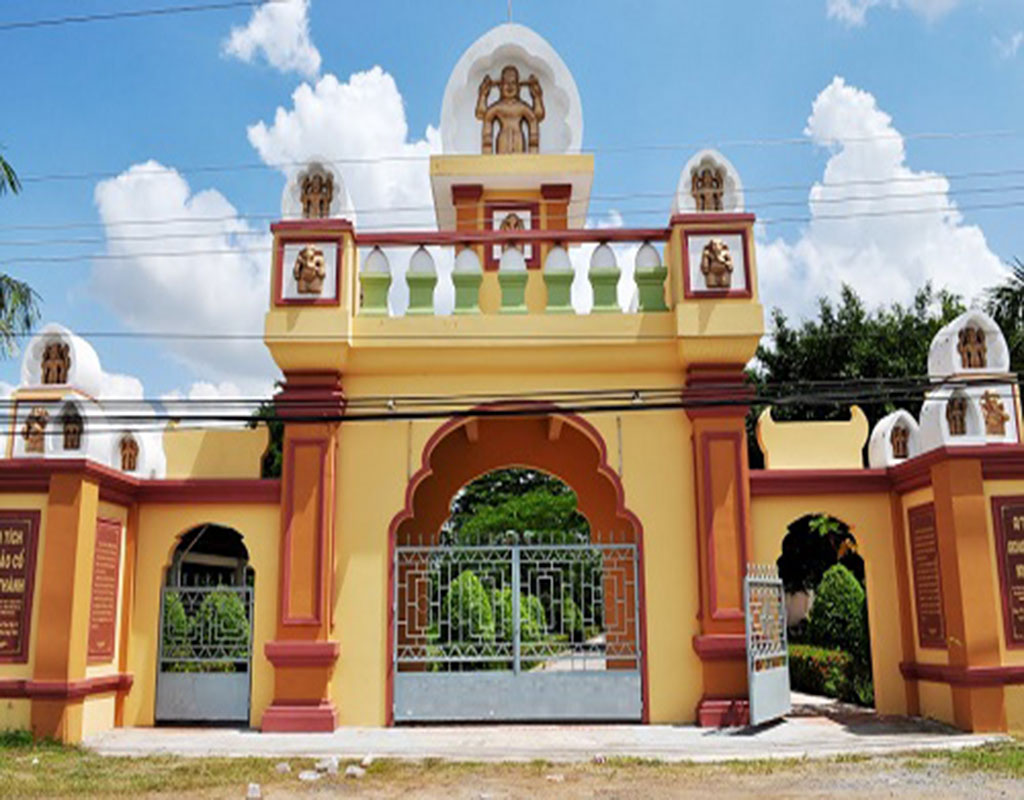
Architectural & Cultural Essay
A National Archaeological Site situated atop an ancient sand mound rising 3 meters above surrounding rice fields along the northeast My Tho – Tan Thuan Binh heritage belt (14 km from downtown My Tho). First documented by French archaeologist Louis Malleret in 1941 and extensively excavated between 1987 and 1989, Go Thanh preserves 12 Funan brick temple foundations from the 4th–8th centuries and hundreds of gold leaves embossed with Ganesha.
Situated on an ancient coastal sand ridge spanning over 1.5 hectares in Tan Thanh Hamlet, Tan Thuan Binh (along the northeastern cultural corridor of My Tho), Go Thanh National Archaeological Site represents one of the most important Oc Eo culture complexes in Southern Vietnam. First surveyed by French scholar Louis Malleret in 1941, the site underwent three major excavations between 1987 and 1990 led by the Institute of Social Sciences in Ho Chi Minh City and Tien Giang Museum. Radiocarbon dating confirmed Go Thanh as a prosperous religious and urban hub of the ancient Funan Kingdom from the 4th to the 8th centuries CE, earning National Relic status on December 2, 1994. Beneath protective open-air shelters, visitors can examine 12 excavated brick structures—including Hindu temple foundations and cremation tombs—built with oversized kilned bricks fitted tightly together without mortar. From the central sacred shafts, archaeologists recovered over 270 pure gold leaves intricately embossed with the elephant deity Ganesha, Garuda, lotus blossoms, and Dharma wheels, alongside sandstone Vishnu statues, Linga–Yoni icons, and thousands of ceramic spouts. The name Go Thanh ('Citadel Mound') originated from 17th-century Vietnamese settlers who mistook the exposed ancient brick walls atop the mound for an old fortress. Today, the site functions as a shaded archaeological park featuring an on-site interpretive gallery mapping Oc Eo settlements across the lower Tien River basin. Pairing a visit to Tien Giang Museum (where the original gold leaves are safeguarded) with a walk around the preserved brick foundations at Go Thanh offers a tangible connection to 1,500 years of delta history.
Highlights
Frequently Asked Questions (3)
The site dates from the 4th to the 8th centuries CE, belonging to the Oc Eo civilization of the ancient Funan Kingdom.